
On July 17, 2023, the list of winners of the “Science Exploration Award” was announced to the public. Dr. Peng Cao, from the Beijing Institute of Life Sciences / Tsinghua University Joint Research Institute of Biomedical Sciences, won the 2023 “Science Exploration Award.”
We extend our warmest congratulations to Dr. Peng Cao!
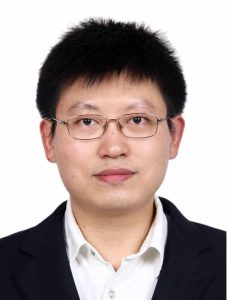
Dr. Peng Cao
Dr. Peng Cao graduated with a bachelor’s degree from the School of Life Sciences, Peking University. He then earned his Ph.D. at the Institute of Biophysics, Chinese Academy of Sciences. From 2005 to 2012, he conducted postdoctoral research at Baylor College of Medicine and Stanford University in the United States. In 2012, he returned to China and became a researcher at the Institute of Biophysics and later at the Beijing Institute of Life Sciences, where he has been studying the neural mechanisms of the body’s defensive responses. As the corresponding author, his research has been published in prestigious academic journals such as Science (2015), Cell (2022), Nature Neuroscience (2019, 2022), and Neuron (2017, 2022). In 2019, he received funding from the National Science Fund for Distinguished Young Scholars, and in 2023, he won the Zhang Xiangtong Neuroscience Young Scientist Award.
When the body is infected by pathogens, it can trigger a series of important pathological defense responses. For example, the digestive system may induce nausea, vomiting, and diarrhea. These responses help expel pathogens quickly, offering crucial protection. The traditional view is that these pathological defense responses mainly depend on the immune system. However, the role of the nervous system in initiating and regulating these responses remains a critical scientific question. To address this, Dr. Cao’s research group established an experimental paradigm using mice to study the neural mechanisms by which the brain perceives pathogen invasion and triggers these defense responses.
As a typical pathological defense response, the mechanisms behind nausea and vomiting have long been unresolved. Dr. Cao’s research team developed a new paradigm using mice to study the mechanisms of nausea-vomiting responses. They discovered “sentinel” cells in the intestines that report pathogen invasion, “operator” cells in the vagus nerve that transmit the information, and “commander” cells in the brain that initiate nausea and vomiting. At the molecular level, they revealed that 5-HT and IL33 in the intestines are the key molecules that trigger nausea and vomiting, showing that chemotherapy drugs cause these side effects by “hijacking” these molecular-cell mechanisms. This research was published in Cell, and a corresponding expert commentary article was also featured in the journal. This work was subsequently reported by Nature Reviews Neuroscience and The New York Times, and was recognized as a major advancement in Chinese neuroscience in 2022 by the Chinese Society for Neuroscience.
In addition to pathological defense responses, the body can also trigger physiological defense responses such as “fight or flight” reactions in the face of danger. Understanding how the brain initiates these physiological defense responses is a significant issue in neuroscience. Dr. Cao’s research team used the innate fear of predators in mice to investigate the neural mechanisms that trigger the fight-or-flight response in the brain. They discovered the key neural pathways in the brain that activate the fight and flight behaviors. Even more interestingly, repeatedly activating the neural pathway for flight behavior led to depressive-like behavior in the mice, while repeated activation of the fight pathway had an antidepressant effect. These findings provide a novel perspective on understanding the mechanisms behind depression.
About the “Science Exploration Award”
The “Science Exploration Award” is a public prize sponsored by the New Foundation for Science and led by scientists, with the goal of encouraging young scientists to explore the “unknown” areas of science. The award focuses on ten fields of basic science and cutting-edge technology. Each year, no more than 50 individuals are selected as awardees, with each recipient receiving a total of 3 million RMB over the course of five years. This is currently one of the highest monetary awards for young scientific talents in China. Established in 2018, the Science Exploration Award has funded 248 young scientists over the past five years, representing 26 cities and 90 research institutions, with an average age of 41.